
You’ve tried the serums. The sheet masks. The “miracle” creams that promised to turn back the clock ten years. And yet — the fine lines are still there, the skin feels thinner, and the glow you had in your 20s feels like a distant memory. Anti-aging skin treatments have evolved dramatically in the last decade, and the gap between what you can do at home and what a dermatologist can actually achieve for you has never been wider.
The real problem isn’t that people don’t care about their skin — it’s that most people are investing in the wrong layer. Topical products work on the surface. True skin rejuvenation happens at the dermal and subdermal level, where collagen lives, where elastin breaks down, and where the real aging process unfolds.
This guide covers the best anti-aging treatments for face and body available today — from non-invasive skin rejuvenation to minimally invasive dermatology procedures — with a specific focus on what’s accessible and cost-effective in the Philippines. By the end, you’ll know exactly what to ask for, what to realistically expect, and how to build a treatment plan that actually works.

Bakit Hindi Sapat ang Skincare Routine Para sa Tunay na Skin Rejuvenation?
Topical skincare maintains skin — it doesn’t reverse structural aging. The reason your moisturizer can’t erase a deep wrinkle is simple: collagen and elastin loss happen in the dermis, roughly 1–2mm below where any cream can penetrate. Anti-aging skin treatments delivered by professionals reach those deeper layers directly, producing results that no over-the-counter product can replicate.
Aging skin loses approximately 1% of its collagen per year after age 25, according to data published in the National Institutes of Health dermatology research database. By age 45, that’s a 20% reduction in structural support — which explains why changes accelerate so visibly in the 40s.
Sun exposure, pollution, and glycation from high-sugar diets compound intrinsic aging. In the Philippines specifically, year-round UV exposure means Filipinos often experience photoaging symptoms earlier than counterparts in temperate climates. That’s not a reason to panic — it’s a reason to be strategic.
Ang 5 Pinakamahusay na Non-Invasive Anti-Aging Skin Treatments para sa Face ngayong 2024
The best non-invasive anti-aging skin treatments stimulate your skin’s own repair mechanisms without breaking the skin barrier, requiring downtime, or carrying surgical risk. These five options have the strongest evidence base in 2024.
- HIFU (High-Intensity Focused Ultrasound) — targets the SMAS layer (the same layer surgeons lift during facelifts) using focused sound energy. Produces gradual tightening over 3–6 months. Single sessions often last 12–18 months.
- Radiofrequency (RF) Skin Tightening — heats the dermis to 40–45°C, triggering collagen remodeling. Devices like Thermage and fractional RF deliver measurable skin tightening with zero downtime.
- Chemical Peels (TCA and Glycolic) — controlled exfoliation that removes damaged outer skin layers, accelerates cell turnover, and reduces hyperpigmentation. TCA peels at 20–35% concentration produce visible results in 1–3 sessions.
- Laser Skin Resurfacing (Fractional CO2 and Erbium) — creates micro-injuries in a fractional pattern, stimulating collagen without removing the full surface. One of the most evidence-backed skin rejuvenation procedures available.
- LED Phototherapy (Red and Near-Infrared) — red light at 630–670nm has been clinically shown to increase collagen synthesis and reduce inflammation. Lower intensity than lasers, but zero risk and suitable for all skin tones.
Non-invasive skin rejuvenation procedures have advanced to the point where we can achieve results equivalent to older surgical outcomes — just with a different timeline and mechanism. The key is pairing the right energy modality with the right skin concern.
American Academy of Dermatology, Clinical Guidelines on Energy-Based Devices, 2023
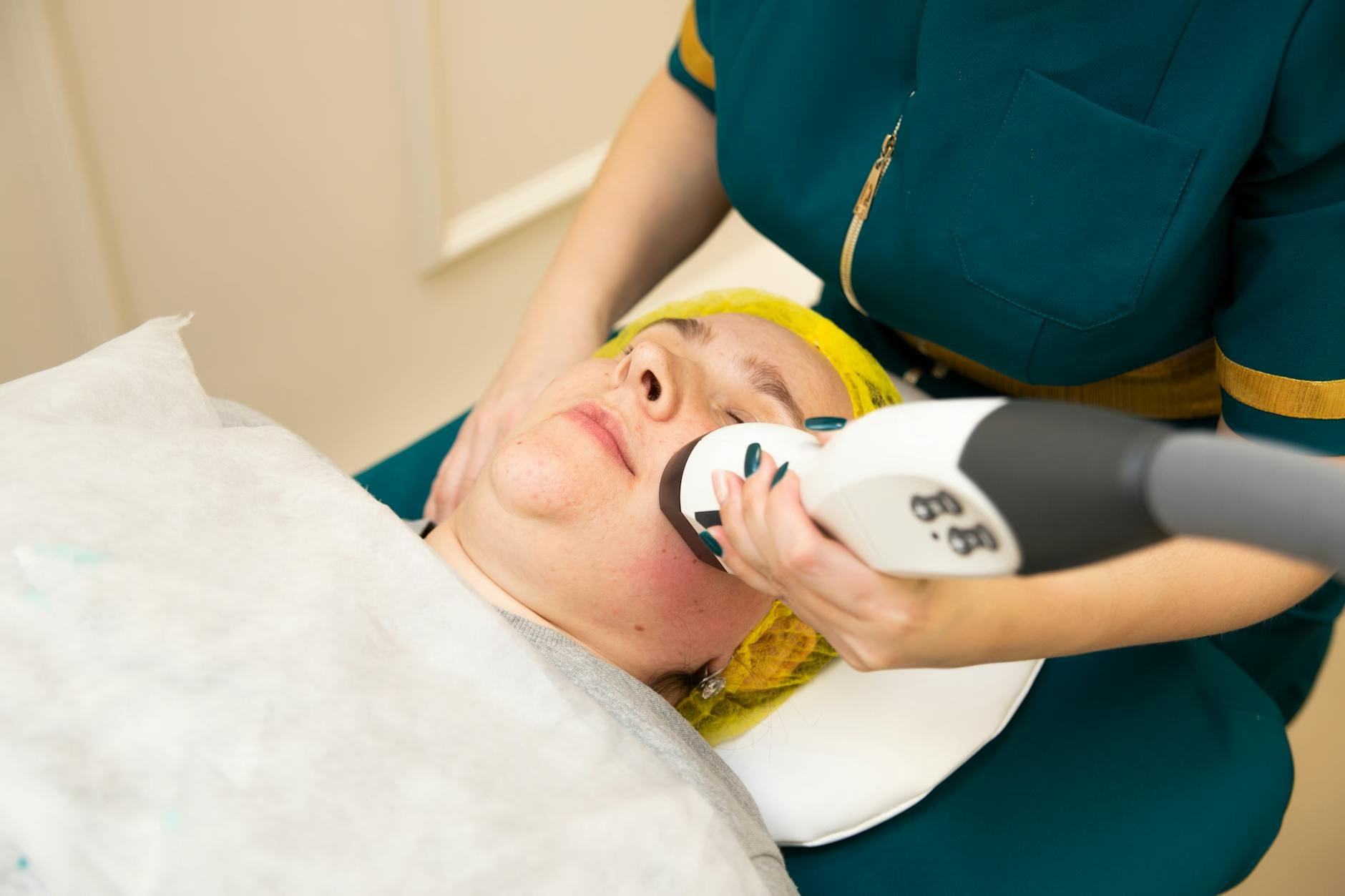
Invasive vs. Non-Invasive Skin Rejuvenation Procedures: Aling Mas Effective para sa Iyo?
Neither is universally superior — the right choice depends on your skin concern, timeline, and tolerance for downtime. Non-invasive skin rejuvenation is better for maintenance, early aging, and patients who can’t take recovery time. Invasive procedures deliver faster, more dramatic results for advanced skin laxity, deep wrinkles, or significant volume loss.
Non-Invasive
- Zero to minimal downtime
- Multiple sessions required
- Gradual, natural-looking results
- Lower per-session cost
- Safe for all Fitzpatrick skin types (with correct settings)
Minimally Invasive
- 1–7 days recovery typical
- Fewer sessions needed
- More immediate visible improvement
- Higher upfront investment
- Requires trained dermatologist or plastic surgeon
What About Injectable Anti-Aging Treatments?
Injectables — specifically botulinum toxin (Botox, Dysport) and hyaluronic acid dermal fillers — sit in their own category: minimally invasive, with almost no downtime but immediate results. Botox relaxes dynamic wrinkles (crow’s feet, forehead lines) for 3–6 months. Fillers restore lost volume in nasolabial folds, cheeks, and lips.
In the Philippines, injectable anti-aging dermatology treatments are among the most popular clinic procedures. The combination of relatively low cost, fast results, and no surgical recovery makes them accessible to a wide demographic — and they integrate well with energy-based treatments.
Is Laser Treatment Safe for Filipino Skin Tones?
Yes — when performed by an experienced dermatologist using appropriate settings. Filipino skin typically falls in Fitzpatrick types III–V, which historically carried higher risk of post-inflammatory hyperpigmentation (PIH) with ablative lasers. Modern fractional and non-ablative laser platforms, combined with proper pre-treatment with hydroquinone or tranexamic acid, have made laser skin rejuvenation safe and effective for darker skin tones.
Paano Gumagana ang Modern Anti-Aging Dermatology Treatments: Ang Teknolohiya sa Likod ng Bawat Procedure
Every effective anti-aging skin treatment works through one of three core mechanisms: stimulating collagen production, removing damaged surface cells, or replacing lost structural volume. Understanding which mechanism a treatment uses helps you set realistic expectations and combine procedures intelligently.
- Thermal stimulation — RF and HIFU use heat energy to denature existing collagen fibers, triggering a wound-healing response that produces new, tighter collagen over 60–180 days.
- Controlled micro-injury — Fractional lasers and microneedling create thousands of microscopic channels in the skin. The body fills each channel with new collagen, improving texture, tone, and firmness simultaneously.
- Chemical exfoliation and resurfacing — Peels dissolve the bonds holding dead and damaged keratinocytes together, revealing newer skin underneath and signaling increased cell turnover at the basal layer.
- Volume restoration — Hyaluronic acid fillers and biostimulators like Sculptra (poly-L-lactic acid) physically replace volume lost to fat pad descent and bone resorption — the structural changes that create hollow cheeks and deepened folds.
- Photobiomodulation — LED and low-level laser therapy deliver specific light wavelengths that mitochondria absorb, increasing ATP production and accelerating cellular repair without any thermal effect.
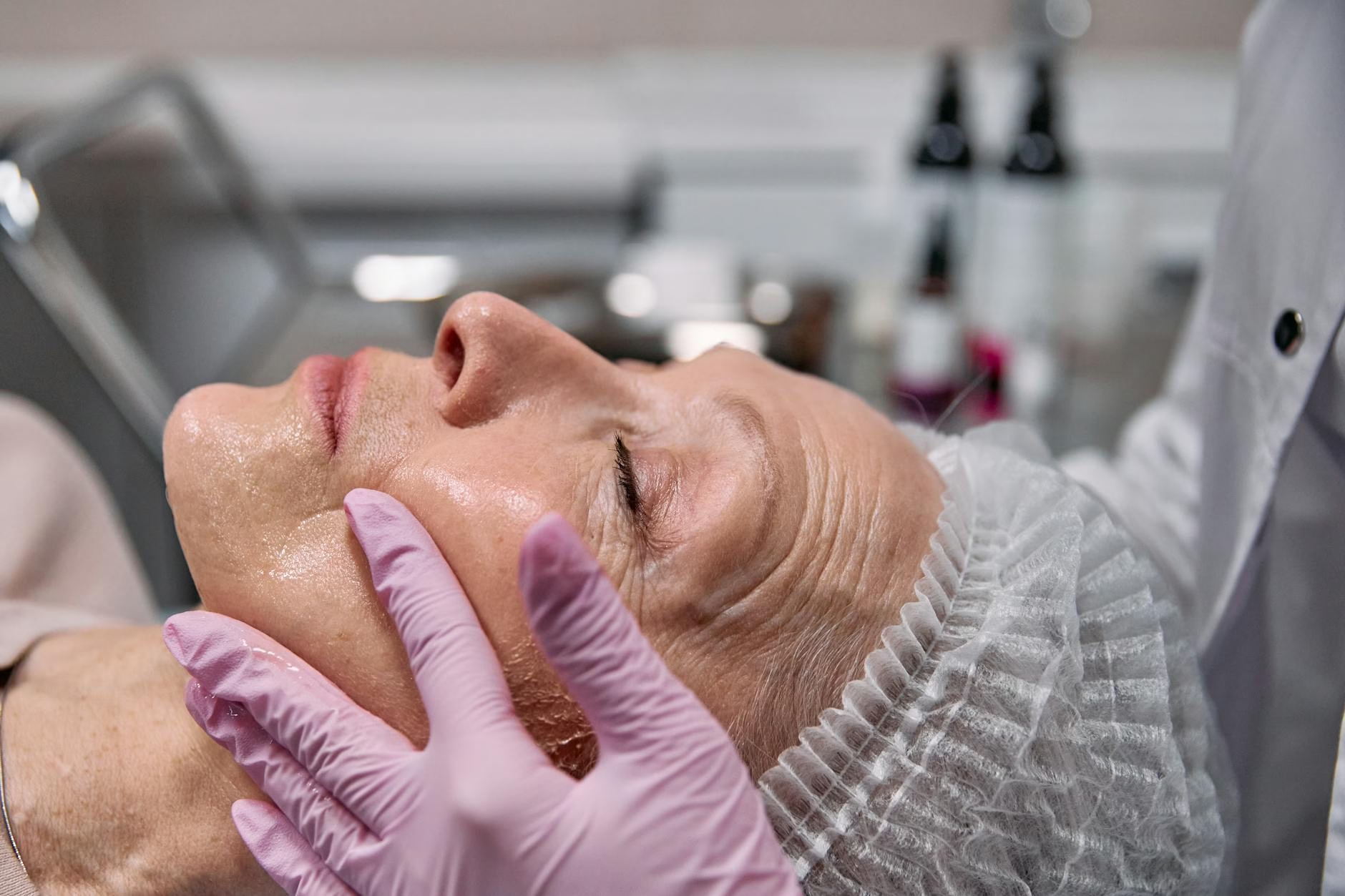
Bakit ang Kombinadong Approach ang Sikreto ng Sustainable Skin Rejuvenation
The single biggest mistake people make with anti-aging skin treatments is treating one problem at a time with one modality. Skin aging is multidimensional — you lose collagen, volume, surface texture, and pigmentation evenness simultaneously. A combined protocol addresses all four axes at once.
Here’s what that looks like in practice. A 42-year-old with early jowling, uneven tone, and fine lines around the eyes doesn’t just need HIFU or just a chemical peel. The most effective protocol for that patient typically layers: HIFU for structural tightening, a series of glycolic peels for surface renewal, low-level LED between sessions for ongoing collagen support, and — if appropriate — a small amount of filler to restore midface volume.
Each treatment reinforces the others. That’s not upselling. That’s how dermatologists who specialize in anti-aging dermatology treatments actually get consistently good outcomes. The skin responds better when multiple stimuli are applied in the right sequence.
What Order Should You Do Anti-Aging Treatments In?
The general protocol sequence matters — do energy-based treatments before injectables, not after. HIFU and RF generate heat that can theoretically degrade freshly injected hyaluronic acid fillers. Standard practice is to complete energy treatments first, wait 2–4 weeks, then proceed with injectables.
Top Anti-Aging Dermatology Treatments Available sa Philippines: Local Guide
Anti-aging dermatology treatments in the Philippines are widely available at dermatology clinics, aesthetic centers, and hospital-based skin departments — particularly in Metro Manila, Cebu, and Davao. The technology is largely on par with what’s available in Singapore and South Korea, with price points 40–60% lower on average.
| Treatment | Primary Concern Addressed | Sessions Needed | Downtime |
|---|---|---|---|
| HIFU (e.g., Ultherapy, Ultraformer) | Skin laxity, jowls, brow lift | 1–2 per year | None |
| Fractional CO2 Laser | Wrinkles, acne scars, texture | 1–3 per year | 5–7 days |
| RF Microneedling (e.g., Morpheus8) | Skin tightening, pores, stretch marks | 3–4 sessions | 2–3 days |
| Chemical Peel (TCA 20–35%) | Pigmentation, fine lines, dullness | 3–6 sessions | 3–7 days |
| Botulinum Toxin (Botox/Dysport) | Dynamic wrinkles, crow’s feet | Every 3–6 months | None–1 day |
| Hyaluronic Acid Fillers | Volume loss, nasolabial folds, lips | Every 9–18 months | 1–3 days |
| LED Phototherapy | Inflammation, collagen support | 6–10 sessions | None |
At Fill It, the approach is integrative — combining the right mix of these modalities based on a thorough skin assessment, rather than defaulting to a single procedure. That matters, talaga, because no two patients age the same way.

Ang Cost-Benefit Analysis: Alin ang Best Anti-Aging Treatment para sa Iyong Budget?
The best anti-aging treatments for face are not always the most expensive ones — they’re the ones correctly matched to your specific skin concerns and age-related changes. A ₱3,000 glycolic peel series can outperform a ₱30,000 single session of the wrong laser if the concern is surface pigmentation rather than deep laxity.
That said, here’s a realistic cost framework for the Philippines market. Entry-level non-invasive options (LED, superficial peels, basic RF) typically run ₱2,000–₱6,000 per session. Mid-tier procedures (RF microneedling, medium-depth peels, Botox) fall in the ₱6,000–₱20,000 range. Premium energy devices (HIFU, fractional CO2 laser, Morpheus8) typically start at ₱15,000–₱40,000 per session, though prices vary significantly by clinic and equipment brand.
Budget Tip: If you’re starting out, a combination of monthly glycolic peels + at-home retinoid + SPF 50 sunscreen delivers measurable improvement in skin texture and tone within 3 months — and costs significantly less than any device-based treatment. Build from there.
Is It Worth Paying More for Premium Devices?
Generally, yes — when the premium reflects FDA-cleared technology with clinical data behind it, not just a fancier room. Ultraformer III, Morpheus8, and fractional CO2 platforms like the Lumenis UltraPulse have peer-reviewed efficacy data. Generic or unbranded “HIFU” devices at rock-bottom prices often lack the precision dosing that makes the treatment actually work. Ask your clinic what specific device they use — it’s a fair and important question, diba.
Frequently Asked Questions tungkol sa Anti-Aging Skin Treatments
At what age should I start anti-aging skin treatments?
The ideal starting point for anti-aging skin treatments is your late 20s to early 30s — not because visible aging is severe yet, but because preventive collagen stimulation produces better long-term results than corrective treatment later. A basic protocol of SPF, retinoids, and periodic chemical peels in your 30s significantly slows the progression you’d otherwise correct with more aggressive procedures at 45.
How many sessions of HIFU or RF do I need to see results?
Most patients see meaningful skin tightening after a single HIFU session, with full results developing over 3–6 months as new collagen matures. RF treatments typically require a series of 3–6 sessions spaced 2–4 weeks apart for comparable results. The timeline difference comes down to mechanism — HIFU reaches deeper tissue in one pass, while RF builds results cumulatively across sessions.
Are anti-aging dermatology treatments safe for morena skin?
Yes — when performed by a qualified dermatologist using appropriate settings and pre-treatment protocols. Darker Fitzpatrick skin types (III–V, common among Filipinos) require lower fluence settings on lasers and a pre-treatment course of melanin-suppressing agents to minimize PIH risk. RF-based treatments are generally safer for darker skin than ablative lasers. Always confirm your provider’s experience with your specific skin tone.
What is the most effective non-invasive skin rejuvenation treatment available?
HIFU (High-Intensity Focused Ultrasound) consistently ranks as the most effective single non-invasive skin rejuvenation procedure for skin laxity and lifting, based on peer-reviewed evidence. For overall skin quality improvement — texture, tone, fine lines, and firmness simultaneously — fractional RF microneedling (e.g., Morpheus8) produces the broadest multi-dimensional improvement with minimal downtime.
Can I combine multiple anti-aging treatments in the same month?
Yes, with proper sequencing. Energy-based treatments (HIFU, RF, laser) should be spaced at least 4–6 weeks apart to allow collagen remodeling to progress. Chemical peels can be layered with LED therapy in the same period. Injectables should generally come 2–4 weeks after energy devices. A dermatologist will design your combination protocol to maximize synergy and avoid over-treating the skin barrier.
Magkano ang magastos ang anti-aging skin treatments sa Philippines?
Anti-aging skin treatments in the Philippines range from approximately ₱2,000 per session for superficial chemical peels and LED therapy to ₱15,000–₱40,000 per session for HIFU and fractional CO2 laser. Injectable treatments (Botox, fillers) typically fall in the ₱8,000–₱25,000 range depending on the product used and areas treated. Combination packages are often available at a 15–25% discount compared to individual session pricing.
Simulan ang Iyong Skin Rejuvenation Journey: Next Steps sa Dermatology Care
Most people overthink the start. They research for months, compare clinics, read about every available technology — and then do nothing, because they don’t know where to begin. Here’s the actual next step: get a proper skin assessment from a board-certified dermatologist. Not a sales consultation. A real assessment that maps your specific concerns — laxity, pigmentation, texture, volume — to the right combination of treatments.
The layered approach we’ve covered here — combining energy-based skin rejuvenation procedures with injectables, peels, and at-home retinoids — isn’t theory. It’s the protocol that separates patients who see transformative results from those who get mediocre ones from doing the same single treatment on repeat.
You started reading this because something about your skin bothered you enough to look for answers. That’s exactly the right instinct. The science-backed anti-aging skin treatments available today can genuinely reverse years of visible aging — not hypothetically, but measurably, with proper protocols and realistic timelines. According to the American Academy of Dermatology, patients who combine multiple treatment modalities report significantly higher satisfaction rates than those using single-modality approaches.
Try this today: book a skin consultation, bring your current skincare routine, and ask your dermatologist specifically about a combined protocol. The conversation you have in that room will do more for your skin than another serum ever will.